Source | Information Obtained |
This Link was used to gather information for photography. | |
This link was used to gather information for photography. |
Saturday, 26 February 2011
1.2 Sources

1.2 Written report on the creative and media employment roles and requirements in a chosen region
Presentation given by Ms Dowdie
1st October 2010
Ms Dowdie, Employer Engagement Officer, gave the creative media students a presentation on creative and media careers.
The creative and media industries combined make one of the fastest growing sectors in the UK economy.
It can be divided into four broad sub-sectors - content, design, performing arts, and heritage and tourism. The sectors in this industry include:
• Advertising
• Architecture
• Art and antiques
• Computer and video games
• Crafts
• Design
• Fashion design
• Film and video
• Music
• Performing arts
• Publishing
- Photography
• Software
• Television and radio
She taught us the key things that drive people into the creative and media industries sector; the UK has been focusing on improving seven areas, which drive productivity in the sector:
• Education
• Competition and intellectual property (IP)
• Technology
• Business support (including access to finance)
• Diversity
• Infrastructure
• Evidence and analysis
From the example that Ms Dowdie gave us of industries in the sector was Photography. So I will be doing some research in the industry to see if it is an industry that interests me.
Photography


Photography is the process, activity, and art of creating still pictures by recording radiation on a radiation-sensitive medium, such as a photographic film, or electronic image sensors. Photography uses foremost radiation in the UV,visible and near-IR spectrum. For common purposes the term light is used instead of radiation. Light reflected or emitted from objects form a real image on a light sensitive area (film or plate) or a FPA pixel array sensor by means of a pin hole or lens in a device known as a camera during a timed exposure. The result on film or plate is a latent image, subsequently developed into a visual image (negative or diapositive). An image on paper base is known as aprint. The result on the FPA pixel array sensor is an electrical charge at each pixel which is electronically processed and stored in a computer (raster)-image file for subsequent display or processing. Photography has many uses for business, science, manufacturing (f.i. Photolithography), art, and recreational purposes.
Camberwell college of arts
Portfolio of work
. A foundation course/ National Diploma/AVCE/ Advanced GNVQ or equivalent
. Pass in 1 GCE A Level
. Passes at GCSE level in 3 subjects (grade C or above)
. Applicants who do not have English as a first language must show proof of IELTS level 6.0, wth a minimum of 5.0 in any one paper, or equivalent.
. Applications are welcome from students who are returning to education after a break and have evidence of related experience/prior learning .

. A foundation course/ National Diploma/AVCE/ Advanced GNVQ or equivalent
. Pass in 1 GCE A Level
. Passes at GCSE level in 3 subjects (grade C or above)
. Applicants who do not have English as a first language must show proof of IELTS level 6.0, wth a minimum of 5.0 in any one paper, or equivalent.
. Applications are welcome from students who are returning to education after a break and have evidence of related experience/prior learning .
Graphic designer

A graphic designer is a professional within the graphic design and graphic arts industry who assembles together images, typography or motion graphics to create a piece of design. A graphic designer creates the graphics primarily for published, printed or electronic media, such as brochures and advertising. They are also sometimes responsible for typesetting, illustration, user interfaces, and web design, or take a teaching position, although these specialties may be assigned to specialists in various graphic design occupations. A core responsibility of the designer's job is to present information in a way that is both accessible and memorable.
Camberwell college of arts
Portfolio of work
A foundation course/ National Diploma/AVCE/ Advanced GNVQ or equivalent
Pass in 1 GCE A Level
Passes at GCSE level in 3 subjects (grade C or above)
Applicants who do not have English as a first language must show proof of IELTS level 6.0, with a minimum of 5.0 in any one paper, or equivalent.
Applications are welcome from students returning to education after a break and the College takes into consideration prior learning, alternative qualifications and experience.
1.2 Research on the creative and media employment roles and requirements in the southbank
Producer


Producers are highly self-motivated individuals, who have the final responsibility for all aspects of a film's production. He or she is frequently the first person to become involved in a project; they participate directly in all the main producing phases; and see the project through production, to post-production, marketing and distribution. The Producer's is role to turn story ideas into profitable cinematic entertainment, and to persuade others to share in his or her commercial and creative vision. Producers usually report to the production company, or to the Executive Producers appointed to supervise the production on behalf of the financiers and Distributors.
Responsibilities
Producers have overall control on every aspect of a film's production, bringing together the Screenwriters, Director, cast, finances and production team. Their primary responsibility is to foster an environment in which the creative talents of the cast and crew can flourish - Producers are therefore ultimately accountable for the success of the finished film. Producers many responsibilities span all four phases of production:
· Development - Producers are often responsible for coming up with the underlying premise of a production, or for selecting the screenplay. Producers secure the necessary rights, select the screenwriter and story editing team, raise the development financing, and supervise the development process.
· Pre-production - Producers typically bring together the key members of the creative team, including the Director, Cinematographer and principal cast..
Post-production and marketing - Producers are expected to liaise personally with post-production personnel, including the Editor, Composer, and Visual Effects staff. They then consult with all creative and financial personnel on the production of the answer (or final) print, and they are usually involved with the financial and distribution entities in planning the marketing and distribution of the finished film.
Producers have overall control on every aspect of a film's production, bringing together the Screenwriters, Director, cast, finances and production team. Their primary responsibility is to foster an environment in which the creative talents of the cast and crew can flourish - Producers are therefore ultimately accountable for the success of the finished film. Producers many responsibilities span all four phases of production:
· Development - Producers are often responsible for coming up with the underlying premise of a production, or for selecting the screenplay. Producers secure the necessary rights, select the screenwriter and story editing team, raise the development financing, and supervise the development process.
· Pre-production - Producers typically bring together the key members of the creative team, including the Director, Cinematographer and principal cast..
Post-production and marketing - Producers are expected to liaise personally with post-production personnel, including the Editor, Composer, and Visual Effects staff. They then consult with all creative and financial personnel on the production of the answer (or final) print, and they are usually involved with the financial and distribution entities in planning the marketing and distribution of the finished film.
University Courses
Ravensbourne College of Design and Technology
CONTENT DEVELOPMENT
AND PRODUCTION
-
BA (Hons)
Two Year Fast Track Degree Course
The BA (Hons) Content Development and Production is a practical,
vocational production course that focuses on generating and
developing ideas into professional and creative content for
traditional broadcast programmes and multiplatform content.
The course is a two year fast track degree course that has been
running successfully for over 10 years and with a solid record
in gaining meaningful employment for its graduates.
The course focuses on developing production skills in programme
making for television and other platforms – for the web and
IPTV, interactive TV and mobile.
Entry Requirements
5 GCSEs (A-C) or equivalent
(preferably including English,
Media/Technology), and at
least one of the following or equivalent UK
2 A Levels (A-C);
4 AS Levels (A-C);
2 vocational A Levels (A-C);
Level 3 Foundation Diploma
or National Diploma; Advanced
Diploma (A-C) or International
Baccalaureate (24 points or
above). Also, an interview and
a portfolio, showreel or other
indicator of creative or technical
practice where appropriate
 Make Up Artist
Make-up and Hair Designers usually work on feature films and high budget television dramas and must be proficient in both make-up and hair techniques. Make-up and Hair are key elements in the overall design of films or television productions, creating a look for the characters in relation to social class, and time periods, and any other elements required to create the desired illusion. Make-up and Hair Designers are responsible for the overall design, application, continuity and care of make-up and hair throughout the pre-production an Increased multi-skilling in the UK film and television industries has meant that personnel are required to be proficient in both make-up and hair, and the departments are often merged. Make Up and Hair Designers' responsibilities vary depending on production needs.
University Courses
Camera Operator
 Camera Operators usually begin work at the end of pre–production and, if the budget allows, attend the technical recces with other Heads of Department..
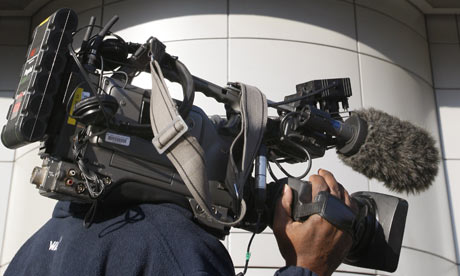 Camera Operators usually begin work at the end of pre–production and, if the budget allows, attend the technical recces with other Heads of Department..
Camera Operators ensure that the camera and associated equipment are prepared for the required set–ups, always keeping alert for any last–minute changes. They must be able to multi–task, and to watch, listen and think on their feet while carrying out complex technical tasks. They liaise closely with the Director, fine–tuning the exact details of each shot, which often involves suggesting creative improvements or alternatives. They supervise the logistics of moving the camera, and oversee the Camera maintenance work carried out by the Focus Puller and the 2nd AC.
Camera Operators work closely with performers, guiding them on what can and cannot be seen by the camera. As it is now common for DoPs to also operate the camera on smaller films, many Camera Operators specialise in the operation of other precision equipment, such as Remote Heads or Steadicam, and most also work on commercials, promos and television drama. On bigger budget films, the role of the Camera Operator remains a crucial link between the creative ambitions of the Director, and other major departments, including Art, Hair and Make–Up and Costume.
Camera Operators work closely with performers, guiding them on what can and cannot be seen by the camera. As it is now common for DoPs to also operate the camera on smaller films, many Camera Operators specialise in the operation of other precision equipment, such as Remote Heads or Steadicam, and most also work on commercials, promos and television drama. On bigger budget films, the role of the Camera Operator remains a crucial link between the creative ambitions of the Director, and other major departments, including Art, Hair and Make–Up and Costume.
University Courses
Brunel University
BA Film and Television
Entry requirements; 3 A levels BCC 240 points IB 24 points
The BA (Hons) in Film & Television Production is a practical production-based course which allows students to focus on developing the skills demanded of planning, managing, shooting and editing films of various genres and for different audiences. The theory that is embedded within the course is delivered within the context of production.
Broadcast Journalist.
 Broadcast Journalism is the collection, verification and analysis of information about events which affect people, and the broadcast and publication of that information in a fair, accurate, impartial and balanced way to fulfil the public's right to know in a democratic society. This involves a variety of media including television, radio, the Internet and wireless devices. Broadcast Journalists working in television work in a variety of genres including news, current affairs, or documentaries. They may be employed by broadcasting companies, or work on a freelance basis.
Broadcast Journalists may be studio or office-based, or work in regional, national or international broadcasters' offices. They may also work from home, utilising broadband and other technology to interface with broadcasters and other employers. When working on news items, they must be prepared to travel, sometimes long distances, at any hour of the day or night, to gather the relevant information. They are responsible for generating ideas, and for assessing the value and accuracy of ideas and information from other sources, researching background data, and presenting items for consideration by Editors, Commissioners, or other decision makers Broadcast Journalism is the collection, verification and analysis of information about events which affect people, and the broadcast and publication of that information in a fair, accurate, impartial and balanced way to fulfil the public's right to know in a democratic society. This involves a variety of media including television, radio, the Internet and wireless devices. Broadcast Journalists working in television work in a variety of genres including news, current affairs, or documentaries. They may be employed by broadcasting companies, or work on a freelance basis.
University Courses
University of Leeds
BA Broadcast Journalism
Entry requirements: 3 Alevels BBB. IB: 32 points overall.
A hands-on course for prospective journalists that features
intensive practical broadcast training alongside academic
scrutiny of the media business. You will learn how to research,
report and produce news in the fast-changing multimedia age,
developing stories for Radio,Television and Online output.
Documentary production skills are taught, and you can choose
to specialise in sports or science journalism during one final
year module.
Make-up and Hair Designers usually work on feature films and high budget television dramas and must be proficient in both make-up and hair techniques. Make-up and Hair are key elements in the overall design of films or television productions, creating a look for the characters in relation to social class, and time periods, and any other elements required to create the desired illusion. Make-up and Hair Designers are responsible for the overall design, application, continuity and care of make-up and hair throughout the pre-production an Increased multi-skilling in the UK film and television industries has meant that personnel are required to be proficient in both make-up and hair, and the departments are often merged. Make Up and Hair Designers' responsibilities vary depending on production needs.
University Courses
The Arts Institute at Bournemouth
Make Up for Media and Performance
2 year full-time Foundation Degree
Entry requirements 1 A Level
Friday, 25 February 2011
1.1 list of sources
| Source | Information obtained |
| http://www.southbankcentre.co.uk/ | This was used to gather information for the south bank. |
| http://www.tate.org.uk/modern/ | This was used to gather information on the tate modern |
| http://www.shakespeares-globe.org/ | This was used to gather information on the shakespeares globe |
| http://www.bfi.org.uk/ | This was used to gather information on the bfi the imax. |
Friday, 11 February 2011
Introduction
All my posts are going to be based on the unit 1 scene of the creative and media diploma.
- Learning Outcome 1.1 Understand the range and types of creative and media activity in a chosen region.
- Learning Outcome 1.2 Understand creative and media employment roles and requirements in a chosen region.
- Learning Outcome 1.3 Be able to develop a personal critical response to a creative or media artefact, activity or event.
- Learning Outcome 1.4 Be able to create a guide to the creative and media scene in a chosen region.
unit 1.1
The SouthBank
South Bank is a beautiful riverside at the heart of central London in the borough of Lambeth, following the themes from Lambeth to Blackfriars bridges. South bank is full of art, theatre, exhibitions; music, film and free event meaning that south bank can be enjoyed by people of all ages. Southbank Centre consists of the Royal Festival Hall (reopened after its two-year transformation), the Hayward Gallery, Queen Elizabeth Hall(containing the Purcell Room), and the Saison Poetry Library. We also manage the Arts Council Collection and organises the National Touring Exhibition programme in venues throughout the UK.
This map shows all the different events in south bank.

http://www.southbankcentre.co.uk/
Creative and media activity in the south bank
http://www.tate.org.uk/modern/
The Globe Theatre
 The Globe theatre was founded in 1949 by Sam Wanamaker associated with William Shakespeare in London. It was built in 1599 by Shakespeare’s playing company , the chamberlains men and was destroyed by fire on 29 June 1613. A second Globe Theatre was built on the same site by 1614 and closed in 1642. The Globe is found in South walk bridge road.

http://www.bfi.org.uk/
South Bank is a beautiful riverside at the heart of central London in the borough of Lambeth, following the themes from Lambeth to Blackfriars bridges. South bank is full of art, theatre, exhibitions; music, film and free event meaning that south bank can be enjoyed by people of all ages. Southbank Centre consists of the Royal Festival Hall (reopened after its two-year transformation), the Hayward Gallery, Queen Elizabeth Hall(containing the Purcell Room), and the Saison Poetry Library. We also manage the Arts Council Collection and organises the National Touring Exhibition programme in venues throughout the UK.
Situated on the south bank of the River Thames next to the popular Merlin Entertainments London Eye, Southbank Centre is at the heart of an arts quarter stretching from the Royal National Theatre and National Film Theatre to Tate Modern and Shakespeare's Globe.
This map shows all the different events in south bank.

http://www.southbankcentre.co.uk/
Creative and media activity in the south bank
Tate Modern
Tate Modern is a national gallery of modern art from all over the world, Located in London. Made from a old power station in 2000 in the heart of London. Tate has special exhibitions, events and education, Collection displays, and collections.

Gauguin

Tate Modern is a national gallery of modern art from all over the world, Located in London. Made from a old power station in 2000 in the heart of London. Tate has special exhibitions, events and education, Collection displays, and collections.
The exhibitions on at the Tate modern are:
Level2 Gallery: Alejandro Cesar co. Present Memory
This exhibition will take place at the Tate Modern from the 10th of July to 31 October 2010. The exhibitions entry is free.
This exhibition is about a Uruguayan artist Alejandro Cesar co who was born on 1975 in Montevideo, Uruguay. He lives and works in New York City.
Present Memory, a newly commissioned video, and features an intimate portrait of the artist’s farther, a doctor recently diagnosed with cancer. Using a 16mm camera, Ceresco filmed his father in his medical practise. This creates a visual echo and activates a sense of déjà vu every time the viewer re-counter it

Gauguin
This exhibition will take place at the Tate Modern from the 30th of September to 16 January 2010. The exhibitions entry is £13.50 and concessions.
This exhibition is about Gauguin one of the worlds most famous and best loved artists from the early 20th century. For the first time in the UK in over 50 years the Tate modern present this exhibition. This exhibition explores the role of the myths around the man-Gauguin as storyteller.
http://www.tate.org.uk/modern/
The Globe Theatre
Performances at The Globe
One of the plays performed at the globe theatre are Henry IV part 1 at 2pm, Saturday 09 October 2010.This play written by the infamous English playwright William Shakespeare.
Another play performed at the globe is Henry IV Part 2 at 7:30 Saturday 09 October 2010 also written by the infamous William Shakespeare.
http://www.shakespeares-globe.org/
IMAX (British film institute)
The BFI London Imax is placed in the centre of waterloo, literally in the middle of a huge roundabout. The Imax cinema opened in 1999 and since then has become an iconic building and a London landmark. Despite being surrounded on all sides by the consent hum of the capital’s road traffic, the building is especially designed to be immune to all noise pollution. The screen is at least the height of 5 double-decker buses. The Imax cinema is known all over the world as there are currently over 60 Imax cinemas.

Screenings shown in the IMAX
The events that are taking place at the Imax cinema are Step up 3D also an Avatar special edition experience on show from the 8-21 October at the Imax cinema.
http://www.bfi.org.uk/
Subscribe to:
Comments (Atom)